
Machinery for crushing rocks into stone
The construction industry relies heavily on high-quality stone aggregates for infrastructure development, road construction, commercial buildings, and residential projects. Producing consistent aggregates from raw quarry rock requires powerful, reliable, and efficient crushing equipment. Modern rock crushing machinery provides comprehensive solutions for transforming large, irregular rocks into precisely sized construction materials while maximizing productivity and minimizing operational costs.
From primary crushing to secondary and tertiary shaping, an integrated rock crushing plant combines advanced technology, robust engineering, and intelligent material processing to deliver superior results. Selecting the right machinery is essential for achieving high production capacity, excellent particle shape, and long-term operational reliability.
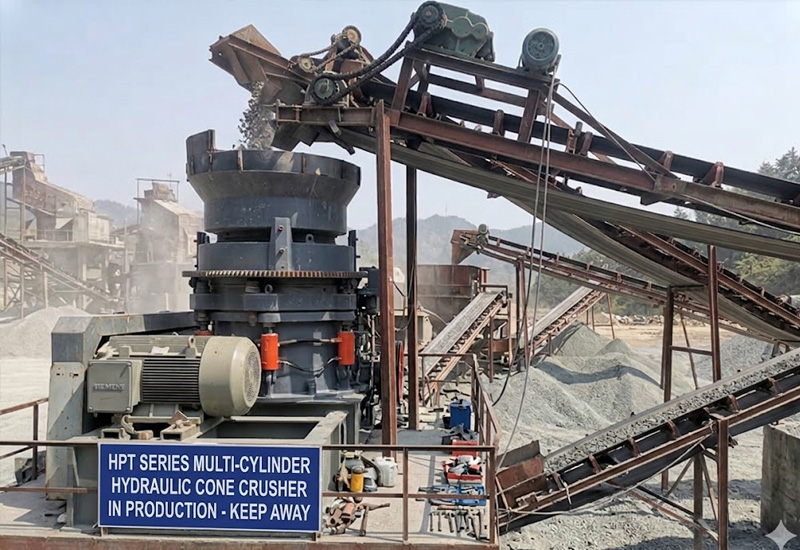
1. Comprehensive Rock Crushing Machinery Solutions
An effective rock crushing operation requires multiple stages of material reduction. Each stage performs a specific function, ensuring that raw quarry materials are processed efficiently into high-grade construction aggregates.
Jaw Crushers for Primary Crushing
Jaw crushers are typically used as the first stage of the crushing process. Designed to handle large, hard, and abrasive rocks, these machines reduce oversized quarry materials into smaller, manageable pieces for downstream processing.
Their crushing mechanism uses a fixed jaw and a movable jaw to compress rock until it fractures. This straightforward design provides several advantages, including high crushing strength, reliable operation, and the ability to process various materials such as granite, basalt, limestone, and river stone.
Modern jaw crushers feature reinforced frames, optimized crushing chambers, and adjustable discharge openings. These improvements help operators achieve higher reduction ratios while maintaining consistent feed sizes for secondary crushing equipment.
Cone Crushers for Secondary and Tertiary Crushing
After primary reduction, cone crushers provide efficient secondary and tertiary crushing. They are particularly suitable for hard and abrasive materials, delivering consistent product sizes and excellent production efficiency.
Cone crushers operate through compression, using a rotating mantle and stationary concave liner to break down rock particles. Their design supports continuous operation under demanding conditions and produces well-graded aggregates suitable for concrete, asphalt, and road construction.
Advanced cone crushing systems offer adjustable settings, hydraulic protection, and automated control features. These technologies help maintain product quality, prevent equipment damage, and optimize production performance.
Impact Crushers for Versatile Crushing and Shaping
Impact crushers are another important component of modern rock processing plants. Unlike compression-based crushers, they use high-speed impact forces to fracture materials against internal plates or other rock particles.
They are especially effective for processing limestone and other suitable materials where excellent particle shape and a high proportion of cubical aggregates are required.
Impact crushers can be used in secondary or tertiary applications, depending on the material characteristics and production objectives. Their ability to produce well-shaped aggregates makes them valuable for manufacturing premium construction materials.
2. High Reduction Ratios for Maximum Productivity
One of the most important performance indicators in rock crushing machinery is the reduction ratio. This measures how effectively a crusher reduces the size of incoming material.
A well-designed crushing system achieves the required reduction across multiple stages without placing unnecessary strain on individual machines. Combining jaw crushers with cone or impact crushers allows quarry operators to process large rocks efficiently while maintaining consistent final product specifications.
Optimized crushing chambers, appropriate equipment configurations, and controlled feeding contribute to improved reduction performance and reduced material recirculation.
3. High Throughput Efficiency and Production Capacity
Production capacity, commonly measured in tons per hour (TPH), directly influences the profitability of a quarry operation.
High-performance crushing machinery is engineered to maintain stable throughput while handling varying material sizes and feed conditions. Equipment selection should account for rock hardness, feed gradation, moisture content, required output sizes, and operating hours.
An integrated crushing plant with properly matched conveyors, vibrating feeders, screening equipment, and crushers can minimize bottlenecks and maintain continuous material flow.
Efficient TPH performance enables operators to meet demanding project schedules while improving overall plant utilization.
4. Structural Durability for Demanding Quarry Conditions
Rock crushing involves extreme mechanical forces, abrasive materials, vibration, and continuous operation. Therefore, structural durability is essential when selecting industrial crushing equipment.
Heavy-duty steel frames, reinforced structural components, wear-resistant liners, and high-quality bearings help machinery withstand demanding working environments.
Replaceable wear parts also extend equipment service life and simplify routine maintenance. Investing in robust machinery reduces the risk of unexpected structural failures and protects long-term production capacity.
Conclusion: Building a More Efficient Rock Crushing Operation
Machinery for crushing rocks into stone plays a vital role in producing high-quality construction aggregates. By combining jaw crushers for primary reduction with cone or impact crushers for secondary and tertiary processing, quarry operators can establish a complete and efficient material production system.
The most effective solutions prioritize high reduction ratios, reliable TPH output, structural durability, energy efficiency, and minimal maintenance downtime.
Investing in a comprehensive rock crushing machinery solution is more than an equipment purchase. It is a long-term strategy for improving productivity, controlling operating expenses, maintaining aggregate quality, and meeting the growing demands of modern construction and infrastructure development.