
Lifespan of wearing parts in jaw crusher
Lifespan of Wearing Parts in Jaw Crusher: Hard-Rock Mechanics and Pit-Proven Survival Tactics
Accelerated degradation of high-manganese components in primary stations directly traces back to unachieved work hardening and intense pressure spikes from material compaction. Tracking tooth profiles and performing mid-life plate rotations will move pristine steel surfaces into high-friction zones, maximizing material deployment while safeguarding the pitman assembly and preventing premature failure of the toggle plate.
Maximizing the wear life of high-manganese alloys isn’t a matter of luck; it requires an aggressive, boots-on-the-ground understanding of abrasive wear patterns, crushing forces, and strict mechanical calibration. In our recent field tests, we tracked the physical deterioration metrics across severe quarry applications to stop the bleeding. Let’s break down the actual failure mechanisms occurring inside the crushing chamber and how to force your wear liners to last.
Crushing Forces vs. Metallurgy: The Reality of Work Hardening
Standard high-manganese steel castings require sustained, heavy impact energy to drive their surface structure from a soft state up past 500 Brinell to resist abrasive shearing. Without proper impact shock, highly abrasive minerals act as micro-cutting tools that strip away metal millimeter by millimeter long before the engineered lifespan is reached.
To understand wear life, you have to look at the massive physical energy being transferred through the machine. Consider heavy-duty primary workhorses like the PEW860 and PEW1100. The PEW860 handles a maximum feed size of 720mm backed by 110kW of motor power. Step up to the monster PEW1100, and you are feeding rocks up to 930mm with an installed power of 180-250kW. That immense wattage isn’t just there to break rock—it exerts terrifying compressive loads directly onto your fixed jaw plates and swing jaws.
Standard jaw plates are cast from high-manganese steel alloys (such as Mn14Cr2 or Mn18Cr2). This metallurgy relies on a specific physical property: work hardening. In its raw state, manganese is relatively soft (around 200-220 Brinell). It requires intense, repetitive impact shock to alter its crystalline structure, driving the surface hardness up past 500 Brinell to resist abrasion. Here is where field variables destroy your liners:
- Rock Compressive Strength: If you are processing rock with extreme unconfined compressive strength but low impact resistance, the rock shatters before it delivers the necessary shock load to work-harden the manganese surface. The result? The alloy stays soft and gets wiped right off the backing plate. Conversely, excessively hard boulders in a PEW1100 can cause localized stresses that exceed the alloy’s yield point, resulting in plastic deformation—the manganese literally “flows” downward toward the discharge, ruining the tooth profile.
- Silica Content (SiO₂): Quartz, granite, and quartzite are packed with highly abrasive silica crystals. Silica acts as a micro-cutting tool. If the manganese has not fully work-hardened, high-SiO₂ particles tear gouges into the teeth during the compressive stroke. This abrasive shearing strips away metal millimeter by millimeter, flatlining your corrugations long before the plate’s engineered lifespan is reached. Our engineers observed that neglecting the correlation between mineral hardness and impact velocity is the primary driver of premature liner scrap.
The Destructive Ripple Effect of Mismanaged CSS
Strangling the closed-side setting beyond recommended baselines creates a structurally incompressible zone of compacted rock in the lower third of the chamber. This localized overloading causes extreme force spikes that reflect directly back onto the toggle plate, leading to fatigue cracking and structural shearing.
One of the most common field failures is an improperly calibrated closed-side setting. Operators frequently tighten the discharge opening past the manufacturer’s recommended baseline to squeeze smaller product out of the primary jaw, attempting to bypass secondary crushing bottlenecks. This is a short-sighted tactic that severely damages your wear parts.
When the closed-side setting is set too tight for a given feed gradation, you create a phenomenon known as “compaction” or “choking” in the lower third of the chamber. Because rock is structurally incompressible when compacted without void space, the material packs into a solid mass. The 180-250kW crushing force of a heavy primary machine trying to stroke through a compacted zone creates astronomical pressure spikes.
This localized overloading accelerates tooth wear exponentially at the bottom of the jaw plates, causing localized flat spots. Worse, that energy reflects directly back onto the toggle plate. The toggle plate is intentionally designed as a mechanical fuse—the weakest link in the structural chain—to protect the heavy eccentric shafts and main frame from catastrophic damage. When you pack the chamber via a strangled discharge setting, the toggle plate is subjected to extreme bending stresses, leading to fatigue cracking or instant shearing. If you are replacing toggle plates regularly, stop blaming the casting quality; your crew is choking the machine.
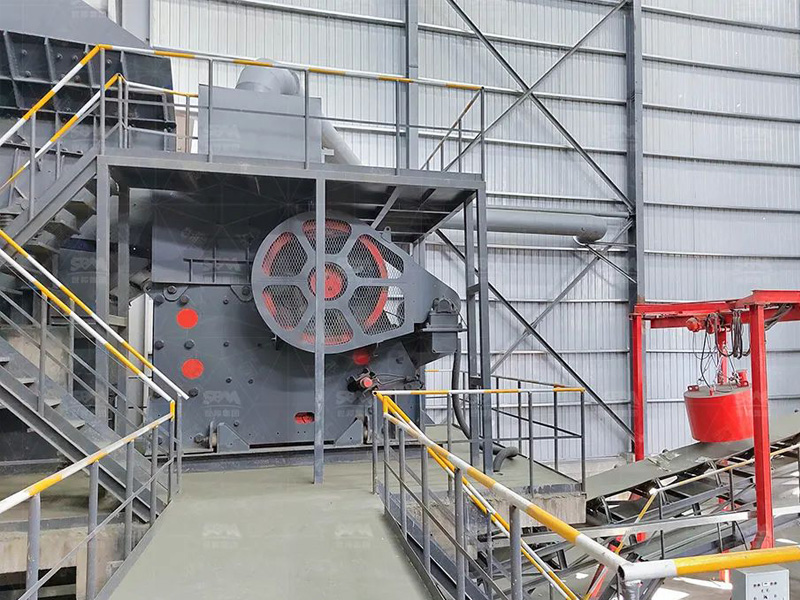
Field Optimization: Profiles and Reversal Protocols
Implementing a structured wear profile audit every 50 operating hours and executing a 180-degree plate reversal at 50% tooth depth depletion effectively doubles casting service life. Sharp corrugations provide immediate point-loading to induce micro-fractures, preventing stones from sliding and slipping against the liner face.
To stop wasting money on premature wear scrap, you must execute two pragmatic operational strategies: tooth profile optimization and aggressive jaw plate rotation.
Tooth Profile Optimization
You cannot use a generic tooth profile for every application. For standard crushed stone production in highly abrasive hard rock, a sharp, heavy-duty Quarry Profile or Super Tooth Profile is mandatory. Sharp corrugations provide concentrated point-loading on large 720mm or 930mm stones. This immediate stress concentration induces micro-fractures in the rock instantly, lowering the overall crushing force required and preventing the stone from sliding up and down against the liner face, which is the primary cause of abrasive wear. Tracking wear patterns in abrasive environments reveals that blunt profiles increase friction-induced heat, accelerating structural softening.
Jaw Plate Reversal Protocols
Because the crushing action and material density increase toward the bottom of the chamber, the lower portion of the fixed and swing jaw plates always wears out first. If left unchecked, the bottom of the plate wears down to the backing material while the top remains at 90% thickness, forcing you to throw away a massive amount of expensive unutilized manganese steel. Review the operational protocols below to establish clear field execution parameters:
| Operational Step | Field Execution Protocol | Technical Objective & Verification |
|---|---|---|
| 1. Wear Profile Auditing | Every 50 operating hours, use a contour gauge to measure tooth depth depletion at the lower 300mm of the crushing chamber. | Establish a clear wear-rate baseline (millimeters per 100 hours) to eliminate guesswork and schedule maintenance windows before frame damage occurs. |
| 2. Mid-Life Reversal (The Flip) | When the lower teeth have worn down by 50% to 55% of their original depth, pull the plates and rotate them 180 degrees. | Moves the thick, unworn top section of the plate into the high-wear zone at the bottom, effectively doubling the service life of the same casting. |
| 3. Backing Layer Inspection | During every flip, completely clean the back of the plates and inspect the epoxy or molten zinc backing material for voids or crumbling. | Ensures an even distribution of compressive forces against the pitman assembly and front frame. A compromised backing layer causes high-frequency vibrations that crack the main jaw castings. |
| 4. Wedge and Torque Lockdown | Re-install wedges and tighten cheek plate bolts to exact OEM torque specs. Re-torque after the first 4 hours and 24 hours of operation under load. | Prevents any micro-movement or lateral shifting of the jaw plates, which causes localized gouging and destroys the crusher frame seating surfaces. |
Managing the lifespan of wearing parts in jaw crusher units comes down to discipline. Keep your closed-side setting calibrated to prevent compaction, match your tooth profile to your rock’s silica content, and flip your plates before the teeth are completely worn smooth. That is how you minimize downtime, protect your machine frames, and maintain an aggressive, profitable production-to-cost ratio.
Field-Side Diagnostics & Operational FAQs
- How does rock compressive strength affect jaw plate wear?
- High unconfined compressive strength requires maximum crushing force. If the rock doesn’t fracture immediately, these forces cause high-manganese alloys to plastically deform or flow downward, ruining the tooth profile before the surface can work-harden effectively.
- What causes a crusher toggle plate to shear or crack frequently?
- Frequent toggle plate failure is almost always caused by an excessively tight closed-side setting or over-feeding fines. This causes material compaction at the discharge zone, creating extreme force spikes that load the toggle plate past its safety threshold as a mechanical fuse.
- Why is a jaw plate reversal protocol critical for reducing operating costs?
- The bottom third of a jaw plate wears much faster than the top due to the concentration of smaller material and final sizing friction. Rotating the plates 180 degrees at mid-life brings the pristine top section down to the high-wear discharge area, extending the casting’s total life by up to 50% and reducing scrap weight.
What is your current jaw plate wear rate on high-silica granite? Send us your feed size, current tooth depth measurements, and operating discharge configuration, and let’s run a localized cost-per-ton analysis to stabilize your profitability timeline.