
Prices of stone crushers for ore extraction
Stone crushers used in ore extraction represent a significant investment, and their financial performance cannot be assessed from purchase price alone. For mining and quarrying operations, the relevant question is how quickly a crusher converts capital into saleable throughput while controlling energy, wear, maintenance, and eventual replacement costs. Equipment such as C6X Jaw Crushers, HST/HPT Hydraulic Cone Crushers, and CI5X Impact Crushers should therefore be evaluated through a full-lifecycle cost model rather than a simple procurement-price comparison.
Procurement Price and Initial CAPEX
The procurement price of a stone crusher typically includes the main machine, but the actual initial capital expenditure can be substantially higher. Freight, foundations, electrical systems, feeders, conveyors, dust suppression, installation, commissioning, and spare-parts inventories can all contribute to project CAPEX.
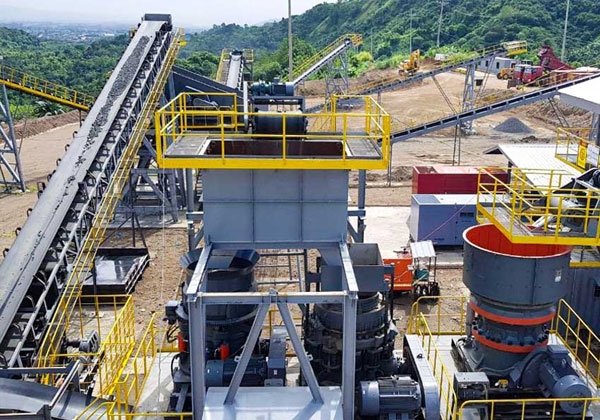
For primary crushing applications, the C6X Jaw Crusher is designed to handle large feed sizes and demanding ore-processing conditions. Its financial value should be considered against required throughput, feed characteristics, and installation requirements rather than its quoted machine price alone. In a typical crushing circuit, the jaw crusher is followed by secondary or tertiary equipment, making its capacity an important determinant of downstream utilization.
HST and HPT Hydraulic Cone Crushers occupy a different cost position because they are generally deployed for secondary, tertiary, or fine crushing. Their higher mechanical complexity can increase acquisition and installation costs, but hydraulic adjustment and automation can contribute to stable product size and reduced operational intervention.
The CI5X Impact Crusher is particularly relevant where impact crushing provides an economic advantage for suitable ore types. Its suitability depends strongly on material hardness, abrasiveness, required product shape, and desired reduction ratio. Procurement decisions should therefore compare the complete circuit cost rather than individual equipment quotations.
Capital Payback Velocity
Capital payback velocity measures how rapidly the incremental investment in crushing equipment is recovered through operating savings and additional productive output. A simplified calculation is:
Payback period = Incremental CAPEX ÷ Annual incremental cash benefit
The annual benefit may come from higher throughput, reduced downtime, lower labor requirements, reduced energy consumption, or lower maintenance costs.
For example, a crusher with a higher purchase price may provide faster payback if it processes more ore per hour and operates for more hours between maintenance events. Conversely, a lower-cost machine can produce a slower payback if frequent liner replacement or unplanned downtime reduces effective availability.
Energy Consumption per Ton
Energy is one of the most important recurring costs in ore crushing. Comparing equipment on motor power alone can be misleading; operators should examine specific energy consumption, expressed as kWh per ton of ore processed.
Actual consumption depends on ore hardness, moisture, feed size, reduction ratio, chamber configuration, operating point, and circuit efficiency. Hydraulic cone crushers such as HST/HPT units can be evaluated according to their ability to maintain consistent crushing conditions, while C6X jaw crushers should be assessed based on primary-stage energy requirements. CI5X equipment can offer economic benefits in applications where impact crushing achieves the required reduction efficiently.
The relevant financial metric is therefore not installed motor capacity but the cost of electricity required to produce one ton of acceptable product.
Wear Costs Under Abrasive Ore Conditions
Wear parts can become a major component of lifecycle cost when extracting highly abrasive ores. Jaw plates in primary crushers and mantles and concave liners in cone crushers gradually lose material during operation. Impact crushers can also experience substantial wear on blow bars and other internal components.
A useful comparison is:
Wear cost per ton = Replacement-part cost ÷ Tons processed between replacements
This metric should include both the component price and associated labor, downtime, transportation, and inventory costs. An inexpensive liner that requires frequent replacement may ultimately cost more per ton than a higher-priced component with longer service life.
For abrasive ores, procurement teams should request expected liner life under comparable operating conditions rather than relying solely on nominal component prices.
Long-Term Asset Residual Value
Residual value is often overlooked in crusher investment analysis. Well-maintained equipment can retain meaningful resale or redeployment value after several years of operation. Factors influencing residual value include manufacturer reputation, machine condition, documented maintenance history, operating hours, availability of spare parts, technological relevance, and remaining wear-part life.
A machine with strong secondary-market demand can reduce the effective lifecycle cost because part of the original investment may be recovered when the asset is sold or transferred to another operation.
Full-Lifecycle Financial Evaluation
A comprehensive evaluation should combine procurement price, installation CAPEX, energy, wear parts, maintenance, downtime, labor, financing costs, and residual value. A simplified total-cost-of-ownership model is:
TCO = Initial CAPEX + Energy + Wear Parts + Maintenance + Downtime Costs − Residual Value
For C6X Jaw Crushers, HST/HPT Hydraulic Cone Crushers, and CI5X Impact Crushers, the optimal economic choice will vary with ore abrasiveness, hardness, throughput requirements, operating hours, and circuit configuration.
Ultimately, crusher purchasing should focus on cost per ton over the asset’s useful life, not simply the lowest purchase price. A higher initial investment can be financially justified when it delivers greater availability, lower energy consumption, longer wear-part life, faster payback, and stronger residual value. Conversely, equipment with an attractive procurement price may become expensive when evaluated against its complete operating lifecycle.