
Prices for portable-type mobile crushers
Portable-type mobile crushers have become essential equipment in mining, quarrying, construction, demolition, and aggregate production. Their mobility, flexible configuration, and ability to process materials directly at job sites make them an attractive alternative to traditional stationary crushing plants. However, purchasing a mobile crusher involves more than comparing equipment prices. Buyers must consider crushing technology, production capacity, mobility options, configuration, operating expenses, and long-term maintenance costs.
Understanding these factors helps businesses select the right equipment while maintaining a reasonable investment budget. This guide explains mobile crusher pricing structures, compares track-mounted and wheel-mounted configurations, and introduces modular pricing tiers based on throughput requirements and application needs.
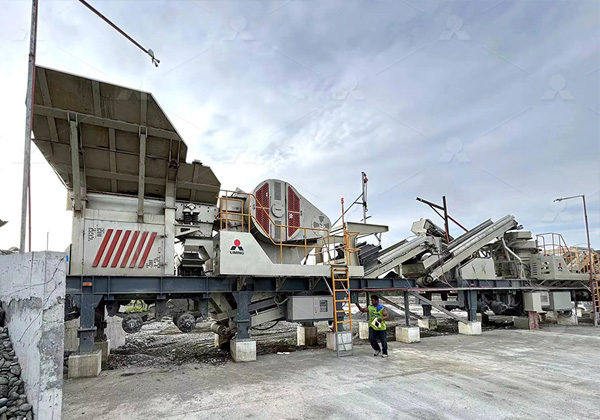
1. Key Factors Affecting Portable Mobile Crusher Prices
The price of a portable mobile crusher varies depending on several technical and commercial factors.
Crushing technology: Jaw crushers are commonly used for primary crushing of large rocks and hard materials. Cone crushers are suitable for secondary and tertiary crushing, particularly when producing uniform aggregates. Impact crushers are frequently selected for limestone, concrete recycling, and applications requiring well-shaped final products. Their prices differ according to crushing mechanisms, components, and processing capabilities.
Production capacity: Throughput, measured in tons per hour (TPH), is one of the most important pricing considerations. Higher-capacity equipment generally requires larger crushers, more powerful motors, stronger frames, and more advanced feeding and conveying systems.
Mobility configuration: Track-mounted crushers offer excellent mobility on uneven terrain and within changing job sites. Wheel-mounted crushers are generally easier to transport between locations using towing vehicles and are often suitable for projects with established access roads.
Customization: Additional equipment, including vibrating feeders, screening units, magnetic separators, conveyors, dust suppression systems, and automated control systems, can increase the overall investment.
2. Track-Mounted vs. Wheel-Mounted Mobile Crushers
The mobility system is one of the most important factors influencing overall investment.
Track-mounted mobile crushers
Track-mounted plants are designed for demanding environments, including remote mines, uneven terrain, and large construction sites. Their crawler systems allow them to move independently without requiring conventional towing equipment.
Advantages include:
- Excellent maneuverability on rough terrain.
- Reduced relocation time between crushing locations.
- Integrated feeding, crushing, and screening configurations.
- Lower dependence on prepared foundations.
Their purchase prices are generally higher because of crawler systems, hydraulic components, and integrated mobility technology.
Wheel-mounted mobile crushers
Wheel-mounted plants are typically more suitable for projects with established transportation access and relatively stable working surfaces. They can be transported between sites using suitable towing vehicles.
Advantages include:
- Lower initial investment in many configurations.
- Convenient highway transportation, subject to local regulations.
- Flexible modular plant arrangements.
- Easier integration into temporary aggregate production facilities.
Although wheel-mounted equipment may cost less initially, transportation vehicles, setup requirements, and relocation logistics should be included in the overall cost comparison.
3. Price Comparison by Crusher Type
Different crushing technologies serve different material-processing requirements.
| Crusher configuration | Main application | Relative investment |
|---|---|---|
| Mobile jaw crusher | Primary crushing of large rocks | Medium |
| Mobile cone crusher | Secondary crushing of hard, abrasive materials | Medium–high |
| Mobile impact crusher | Concrete recycling and softer-to-medium-hard materials | Medium–high |
| Track-mounted jaw plant | Remote primary crushing | High |
| Wheel-mounted jaw plant | Road-accessible primary crushing | Medium |
| Integrated multi-stage plant | Complete aggregate production | High–very high |
Jaw crushers are commonly selected for primary crushing because of their ability to handle large feed sizes. Cone crushers are suitable for secondary and tertiary crushing, particularly in hard-rock applications. Impact crushers provide good particle shaping and are widely used in limestone processing and construction waste recycling.
Actual prices should be requested according to capacity, motor power, feed opening, discharge size, and included equipment rather than crusher category alone.
4. Modular Pricing Tiers Based on Production Capacity
A modular pricing framework simplifies commercial inquiries by organizing equipment into production-capacity categories.
The following tiers are indicative procurement categories, not fixed market quotations. Actual prices depend on specifications, manufacturer, region, and configuration.
| Pricing tier | Throughput | Recommended configuration |
|---|---|---|
| Entry-level | 50–100 TPH | Single mobile jaw or impact crusher |
| Standard | 100–200 TPH | Jaw crusher with optional screening |
| Professional | 200–300 TPH | Jaw and cone or impact combination |
| Industrial | 300–500 TPH | Integrated multi-stage crushing plant |
| Heavy-duty | 500+ TPH | Customized multi-unit production system |
Each tier should have a clearly defined base configuration. Optional modules can then be added according to operational requirements.
For example, an entry-level package may include a mobile crusher, basic conveyor system, and standard electrical controls. A professional package could include primary and secondary crushing, screening, conveyors, and automated control. Industrial packages may incorporate multiple screens, stockpile conveyors, dust suppression, and centralized monitoring.
This structure allows buyers to compare quotations without paying for unnecessary equipment.
5. How to Compare Total Ownership Costs
The lowest purchase price does not necessarily represent the best investment. Buyers should evaluate the total cost of ownership (TCO), which includes:
- Initial equipment purchase.
- Freight, transportation, and import duties.
- Installation and commissioning.
- Fuel or electricity consumption.
- Wear parts and routine maintenance.
- Labor and operator training.
- Equipment downtime and replacement components.
A useful comparison metric is cost per processed ton:
Cost per ton = Total operating costs ÷ Total tons processed
This calculation helps buyers compare different mobile crushing configurations based on actual production economics rather than purchase price alone.
6. Streamlining Commercial Inquiries and Quotations
To obtain accurate pricing, buyers should provide suppliers with a standardized set of project details:
- Required production capacity in TPH.
- Material type, hardness, and maximum feed size.
- Desired final product sizes.
- Required crushing stages.
- Track-mounted or wheel-mounted preference.
- Screening and conveying requirements.
- Project location and expected operating hours.
Suppliers should respond with itemized quotations covering the base machine, optional modules, technical specifications, delivery costs, warranty, and spare-parts availability.
A three-tier quotation structure—Basic, Standard, and Customized—can further simplify purchasing decisions.