
200 tons/hour mobile gold ore crusher for sale
For gold mining operations, crushing performance directly influences downstream grinding efficiency, mineral liberation, and ultimately gold recovery. A 200 tons/hour mobile gold ore crusher offers a practical solution for mines that need high and consistent processing capacity without the delays and infrastructure requirements associated with conventional stationary crushing plants.
Designed for demanding mine-site conditions, modern mobile crushing plants—such as K or NK series configurations—combine robust crushing equipment, intelligent feeding systems, integrated conveying, and highly mobile chassis designs. Their primary advantage is not simply achieving a rated 200 tons per hour, but maintaining stable throughput under continuous heavy-duty operation.
Maintaining 200 TPH Under Gold-Bearing Rock Loads
Gold-bearing ore can present challenging crushing conditions. Depending on the deposit, feed material may contain hard, abrasive rock, large lumps, and variable moisture content. A crusher that briefly reaches 200 TPH but frequently suffers from overloads, blockages, or uneven feeding cannot deliver the same practical production value as a plant capable of sustaining its rated capacity.
Mobile plants designed around the 200 TPH class address this challenge through coordinated equipment selection. The crusher, vibrating feeder, conveyor, and screening components are matched so that material flows continuously through the system rather than accumulating between stages.
For heavy gold ore, maintaining a consistent feed rate is especially important. Excessive surges can overload the crushing chamber, while insufficient feed reduces utilization. Properly controlled feeding keeps the crusher working within its effective operating range, helping maintain stable hourly production and reducing unnecessary mechanical stress.
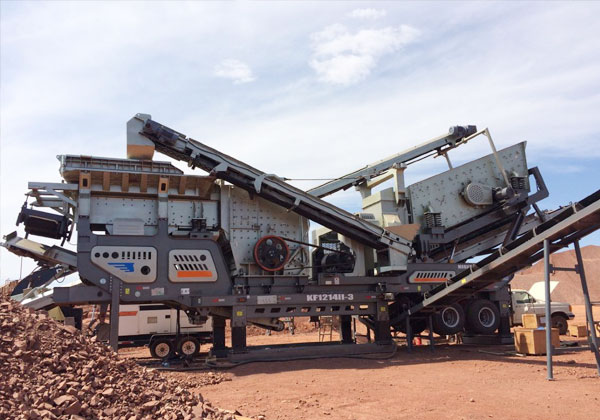
Intelligent Continuous Feeding Eliminates Feed Bridging
Feed bridging is one of the most disruptive problems in primary crushing. Large or irregularly shaped rocks can become lodged at the feed opening, stopping material flow and forcing operators to intervene. Every blockage means lost production and additional safety risks.
Advanced mobile gold crushing plants can incorporate continuous and intelligently controlled feeding systems to minimize this problem. A vibrating feeder regulates material entering the crusher while separating excessive fines and maintaining a more uniform feed profile.
This continuous-feed approach helps prevent sudden material surges and reduces the likelihood of oversized rocks becoming trapped at the crusher inlet. When combined with appropriate hopper design and crusher configuration, the system allows operators to maintain a steady material stream even when the gold-bearing rock varies in size and hardness.
The result is greater utilization of the crushing equipment and fewer interruptions during long production shifts.
Zero-Foundation Deployment Accelerates Mine-Site Setup
Traditional stationary crushing plants often require substantial civil engineering work, including concrete foundations, structural supports, electrical infrastructure, and extended installation periods. These requirements can delay production, particularly at remote gold mines or temporary mining sites.
A mobile 200 TPH crushing plant changes this equation. Its integrated chassis allows major processing components to be transported and positioned as a complete unit. Depending on the specific configuration and site conditions, the plant can operate with minimal or zero permanent foundation requirements.
This substantially reduces preparation time. Instead of waiting for extensive concrete construction and equipment installation, mining companies can move the crusher directly toward the working area, connect the necessary utilities, establish material flow, and begin commissioning.
For mines where the ore body or working face changes frequently, this mobility can also reduce relocation downtime and keep the crushing circuit closer to the active extraction zone.
Choosing a 200 TPH Mobile Gold Crusher for Sale
When evaluating a 200 tons/hour mobile gold ore crusher for sale, buyers should look beyond the headline capacity. The critical questions are whether the plant can maintain stable throughput under actual ore conditions, prevent feed interruptions, deploy rapidly, and remain available throughout demanding production schedules.
A well-integrated K or NK series mobile configuration can provide these advantages by combining continuous feeding, appropriately selected crushing equipment, mobility, and streamlined maintenance. For gold mines seeking to shorten installation time while maximizing production availability, a 200 TPH mobile crushing plant provides a flexible approach to converting mined rock into a consistent downstream feed.
Ultimately, stable 200 TPH performance is about more than crusher size—it depends on the entire mobile crushing system working continuously as one unit. By eliminating avoidable feeding interruptions, reducing site construction requirements, and maximizing operating uptime, mobile gold ore crushing plants can help mining operations process more ore efficiently and create greater opportunities for gold extraction.