
Artificial sand crushing technology
Artificial sand crushing technology has evolved significantly, offering a sustainable alternative to natural sand extraction. As global demand for construction materials rises, the production of high-quality artificial sand—also known as manufactured sand (M-Sand)—has become essential for infrastructure projects, concrete production, and environmental conservation.
What Is Artificial Sand Crushing Technology?
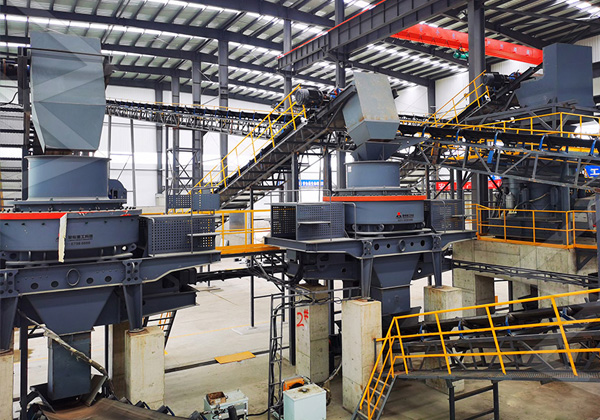
Artificial sand is produced by mechanically crushing hard rocks, such as granite, basalt, limestone, or river gravel, into fine particles using specialized machinery like PCL impact crushers (also known as vertical shaft impactors or VSI crushers). These machines ensure the sand particles are well-shaped, graded, and free of impurities—making them ideal substitutes for natural sand.
Key Components of Artificial Sand Production
1. Primary Crushing
- Jaw Crusher: Large stones are initially crushed into smaller pieces using a jaw crusher, which provides the first stage of size reduction.
- Gyratory Crusher: For larger-scale operations, gyratory crushers are used due to their high capacity and efficiency in handling hard rocks.
2. Secondary & Tertiary Crushing
- Cone Crusher: Further reduces the material size to achieve the desired granularity.
- Impact Crusher (VSI – Vertical Shaft Impact Crusher): The most critical machine for shaping artificial sand, producing well-graded, cubical particles ideal for concrete and asphalt production.
3. Screening & Grading
- After crushing, materials are sieved using vibrating screens to separate different grain sizes.
- Air Classifiers: Used in dry processing to ensure fine-tuning of particle size distribution.
Advantages of Artificial Sand Crushing Technology
✔ Consistent Quality: Unlike river sand, artificial sand is free from impurities and has uniform particle shapes.
✔ Eco-Friendly: Reduces reliance on unsustainable river sand mining, protecting natural ecosystems.
✔ Higher Strength: Cubical-shaped particles enhance concrete strength and durability.
✔ Customizable Gradation: Adjustable crushing settings allow for the production of sand tailored to specific construction needs.
✔ Cost-Effective: Reduces transportation costs as production can be done near construction sites.
Applications of Artificial Sand
● Concrete Production: Enhances workability and strength.
● Asphalt Mixes: Provides better binding and stability.
● Plastering & Masonry: Produces smooth finishes due to controlled particle shape.
● High-Purity Applications: Used in glass and semiconductor industries after further refinement.
By adopting advanced crushing solutions, industries can ensure a steady supply of quality aggregates for future infrastructure needs.
Would you like details on specific artificial sand production configurations for different capacities?