
Crushers suitable for iron ore beneficiation
Iron ore beneficiation is a crucial process in mining, aimed at improving the quality of iron ore to meet industrial standards for steelmaking. The efficiency of this process largely depends on the selection of appropriate crushing equipment, as the size reduction of raw iron ore determines the subsequent stages of grinding, separation, and concentration. Choosing the right crusher not only ensures better ore recovery but also reduces operational costs.
1. Jaw Crushers
Jaw crushers are widely used as primary crushers in iron ore beneficiation plants. They operate with two plates—one fixed and one movable—that crush the ore by compressive force.
Advantages:
-
Can handle large, hard, and abrasive iron ore lumps.
-
Simple structure with easy maintenance.
-
High crushing ratio, suitable for primary reduction.
Applications:
Jaw crushers are typically used at the first stage of crushing to reduce ore to manageable sizes (up to 150–300 mm), making it suitable for secondary crushing or direct feeding to grinding mills.
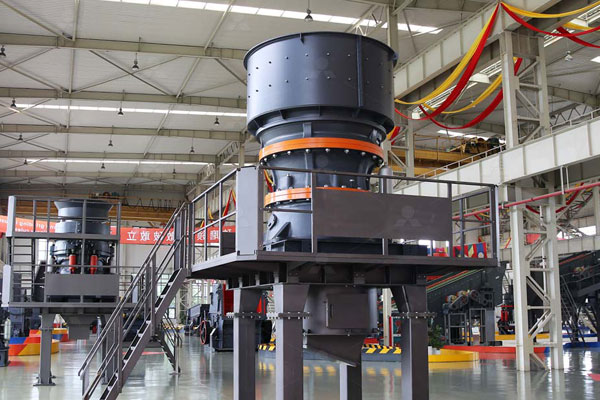
2. Gyratory Crushers
Gyratory crushers are similar to jaw crushers but offer continuous crushing with a conical head that gyrates inside a stationary outer shell.
Advantages:
-
Suitable for large-scale mining operations.
-
Can process high-capacity, hard iron ore efficiently.
-
Produces uniform-sized output, ideal for beneficiation processes.
Applications:
They are preferred in large iron ore mining plants where high throughput and uniform size reduction are critical.
3. Cone Crushers
Cone crushers are secondary or tertiary crushers designed to handle smaller ore pieces after primary crushing. They crush ores using a rotating cone inside a fixed outer shell.
Advantages:
-
High crushing efficiency with fine output sizes.
-
Can crush medium to hard iron ores effectively.
-
Adjustable output sizes for specific beneficiation requirements.
Applications:
Cone crushers are used to prepare iron ore for grinding and beneficiation processes such as magnetic separation or flotation. They are especially suitable for producing iron ore fines for pelletizing.
4. Impact Crushers
Impact crushers use impact force rather than compression to break ores. They are suitable for iron ores with low abrasiveness.
Advantages:
-
Can produce cubical and uniform-shaped ore particles.
-
Effective for ores with low to medium hardness.
-
Reduces the load on subsequent grinding processes.
Applications:
Impact crushers are often used in iron ore plants where ore is brittle or when a high-quality particle shape is needed for sintering or pellet production.
Key Considerations for Choosing Crushers in Iron Ore Beneficiation
-
Ore Hardness: Harder ores require jaw or gyratory crushers, while softer ores can be handled by roll or impact crushers.
-
Desired Particle Size: For pelletizing, fine crushing is essential, making cone and impact crushers ideal.
-
Throughput Requirements: Large-scale mining demands high-capacity crushers such as gyratory or heavy-duty jaw crushers.
-
Abrasiveness of Ore: High-abrasive iron ores require wear-resistant crushers to reduce maintenance costs.
-
Downstream Process Needs: The crusher should produce the right particle size and shape for grinding mills, magnetic separators, or flotation cells.
Selecting the appropriate crusher for iron ore beneficiation is critical for the efficiency, cost-effectiveness, and quality of the final product. A combination of primary, secondary, and tertiary crushers—typically jaw, cone, and impact crushers—is often used to ensure optimal size reduction. By matching crusher types to ore characteristics and beneficiation requirements, mining operations can maximize output, reduce energy consumption, and produce high-quality iron ore suitable for steelmaking.