
Fines control in granite crushing line
Granite is a highly durable and widely used construction material, but during crushing and screening, excessive fines generation can lead to inefficiencies and product quality issues. Proper fines control in a granite crushing line ensures optimal particle size distribution, minimizes waste, and maximizes product profitability.
Challenges of Excessive Fines in Granite Crushing
- Lower Product Quality – Too many fines reduce the structural integrity of aggregates, making them unsuitable for high-grade concrete or asphalt applications.
- Increased Energy Consumption – Over-crushing granite leads to unnecessary power consumption in crushers and mills, raising operational costs.
- Material Loss & Storage Issues – Small particles tend to disperse easily, leading to material loss and dust-related environmental concerns.
Key Strategies for Fines Control in Granite Crushing
1. Selecting the Right Crushing Equipment
- Jaw Crusher (Primary Crushing) – Effective for initial size reduction with minimal fines due to compressive crushing action.
- Cone Crusher (Secondary Crushing) – Provides better particle shape and controllable output, reducing fines generation.
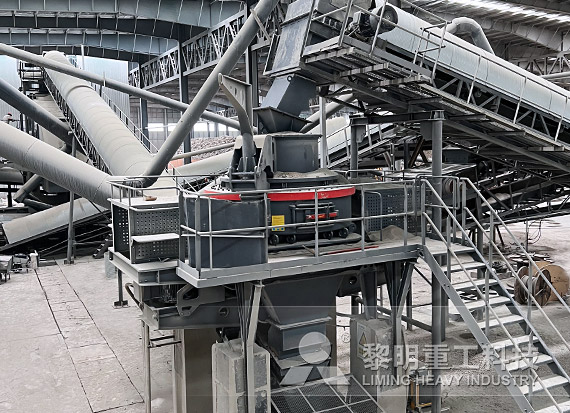
- Vertical Shaft Impact (VSI) Crusher (Tertiary Crushing) – Ideal for shaping aggregates while keeping fines production low.
2. Optimizing Screening Processes
- Multi-Deck Vibrating Screens – Efficiently separate fines from desired particle sizes before further processing.
- Adjustable Screen Settings – Fine-tuning screen mesh sizes helps redirect oversized material back for re-crushing, avoiding over-processing.
3. Adjusting Crushing Chamber Parameters
- Closed-side settings (CSS) on cone and jaw crushers should be optimized to balance fines production and throughput.
- Increasing the crushing chamber’s stroke or reducing speed can minimize fines generation.
4. Implementing Closed-Circuit Grinding (if applicable)
- For fine granite powder production (e.g., in ultrafine grinding), closed-circuit systems with air classifiers help segregate fines more effectively.
5. Using Wet Suppression Systems
- Water spray systems in crushing and transfer points reduce dust and airborne fines, improving air quality and material recovery.
6. Regular Maintenance & Wear Part Monitoring
- Worn-out liners, mantles, and screen meshes increase fines due to inefficient crushing. Regular inspections and timely replacements maintain crushing efficiency.
Effective fines control in granite crushing requires a balanced approach—selecting the right crushers, optimizing screen settings, and monitoring wear parts. By minimizing unnecessary fines, operators can enhance product quality, reduce energy consumption, and increase overall profitability.
Would you like more details on any specific aspect of fines management? Let me know how I can refine this further for your needs.