
Small ore crusher design scheme
The demand for small-scale mining and mineral processing operations has increased the need for compact, efficient ore crushers. A well-designed small ore crusher is crucial for reducing raw ore into manageable sizes while ensuring high productivity, energy efficiency, and low maintenance costs. This article outlines a comprehensive design scheme for a small ore crusher, including structural design, material selection, and operational considerations.
Introduction
Small ore crushers are primarily used in mining operations, metallurgy, and construction industries to crush ores like iron, copper, gold, and other non-ferrous metals. They are particularly suitable for small-scale mining enterprises or laboratory applications where large crushers are impractical.
Key objectives in designing a small ore crusher include:
-
High crushing efficiency and uniform product size
-
Compact structure for limited space
-
Simple operation and maintenance
-
Cost-effectiveness
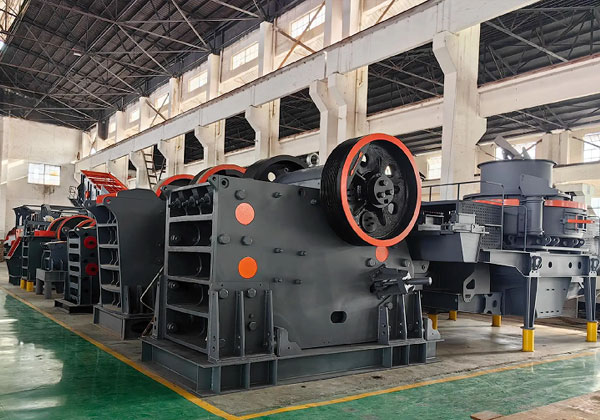
Selection of Crusher Type
The choice of crusher type depends on the ore properties and desired output size. Common small ore crusher types include:
-
Jaw Crusher
-
Uses compressive force to crush hard ores.
-
Suitable for primary crushing of medium to hard ores.
-
Features simple structure, easy maintenance, and large feed opening.
-
-
Impact Crusher
-
Uses impact energy to crush ores.
-
Ideal for softer ores and producing finer particle sizes.
-
Offers high crushing ratio and uniform output.
-
-
Cone Crusher
-
Suitable for secondary or tertiary crushing of medium-hard to hard ores.
-
Provides stable performance and high efficiency for continuous operation.
-
-
Roller Crusher
-
Uses compression and shear forces between two rollers.
-
Best for small-scale, low-capacity operations with relatively soft ores.
-
Design Considerations
When designing a small ore crusher, several key factors must be considered:
1. Crushing Capacity
The crusher’s capacity should match the ore feed rate to avoid bottlenecks. For small crushers, the typical capacity ranges from 1 to 50 tons per hour, depending on ore type and particle size requirements.
2. Feed Size and Discharge Size
-
Feed size: The crusher should accept raw ore in sizes that do not exceed its designed maximum feed size.
-
Discharge size: Adjustable output size ensures compatibility with downstream processing. For example, jaw crushers can have discharge sizes from 10 mm to 100 mm.
3. Material Selection
Durable, wear-resistant materials are essential for key components:
-
Jaw plates, impact plates, and liners: High manganese steel or alloy steel
-
Frame: Cast iron or welded steel plate structure
-
Shafts and bearings: High-strength steel for stability and longevity
4. Power and Drive Mechanism
Small ore crushers typically use electric motors or diesel engines. The design should ensure efficient energy transfer with minimal power loss. Belt drives, gears, or hydraulic drives are common mechanisms.
5. Portability and Space Utilization
For small-scale operations, the crusher should be compact and, if possible, mobile. Designs often include wheels or skid-mounted frames for easy transport.
6. Safety and Maintenance
-
Guarding around moving parts
-
Emergency stop mechanisms
-
Easy access for maintenance, including removal of jaw plates or impact hammers
Proposed Design Scheme
A typical small ore crusher design may include:
-
Frame Structure: Welded steel plate frame, reinforced for vibration resistance.
-
Crushing Chamber: Adjustable for varying discharge sizes.
-
Feeding Mechanism: Hopper with a controlled feed system to ensure consistent crushing.
-
Drive System: Electric motor coupled with a belt and pulley or gear system.
-
Output System: Vibrating screen or chute to separate crushed materials.
Optional features for enhanced efficiency:
-
Dust collection system
-
Lubrication monitoring system
-
Automatic overload protection
A well-designed small ore crusher balances efficiency, durability, and cost-effectiveness. By selecting the right crusher type, optimizing the design for feed and discharge requirements, and using high-quality materials, small-scale mining operations can achieve reliable crushing performance. The proposed design scheme emphasizes simplicity, safety, and adaptability, making it suitable for diverse ore types and operational scales.